What Parenting a Neurodivergent Child Taught Me About Leadership in Complexity
Many leaders are navigating constant change, uncertainty, complexity, and increasing diversity of experience and thinking. Yet many of our leadership instincts were shaped in environments that were more predictable.
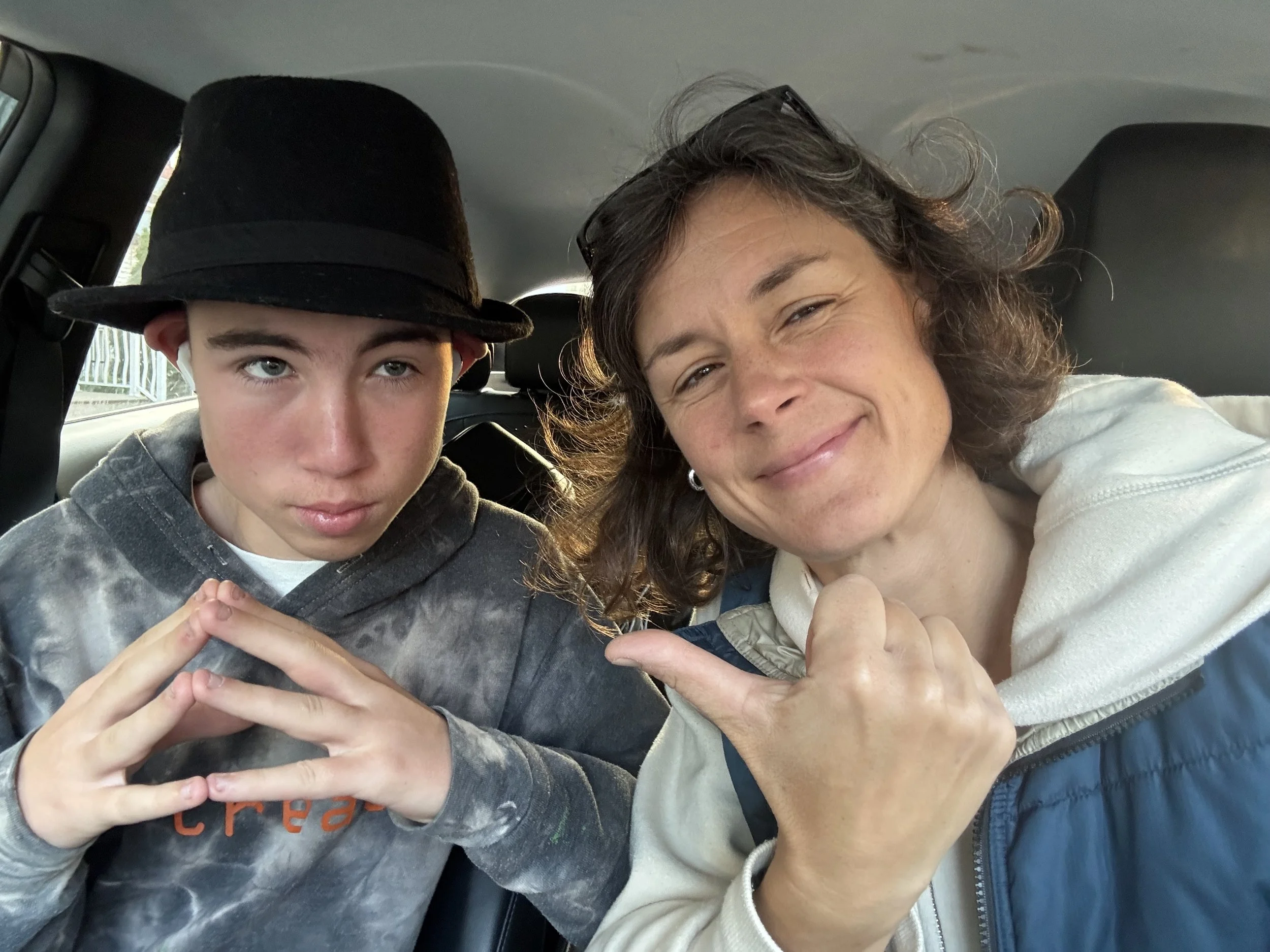
My deepest leadership education did not happen at work. It happened at home. Parenting a neurodivergent child moved me into an entirely different relationship with regulation, conflict, motivation, belonging, adaptation, and human behaviour.
When you parent a neurodivergent child, standard parenting insights don’t work; they never have. Especially if your child is undiagnosed, you’ve had to discover it all from the bottom up - including living through confusion, exhaustion, heartbreak, and the pain of repeated failure until you find your way.
You learn very quickly that you can’t force connection. You can’t force regulation. You can’t force motivation, belonging, homework, or emotional safety. In many cases, you are trying to teach things you yourself were never taught. You are pushed - sometimes gently, sometimes violently - into a different way of understanding human beings.
And if you let it, that experience changes you.
I used to think leadership was primarily about strategy, clarity, decisiveness, and communication. Those things are important, but parenting a neurodivergent child taught me that underneath all of that, leadership is really about relationship. About nervous systems and regulation. About what becomes possible when people feel safe enough to be fully seen - and what happens when they don’t.
1) The impact of co-regulation
I remember a particularly tense conflict that erupted at work - in a room full of adults. I could feel my heart racing, my palms sweating, and the familiar urge to escape - to smooth things over, move on, jump out. Instead I breathed. I noticed what was happening inside me rather than being overtaken by it. I stayed present enough to listen and to regulate. Slowly, the room settled, the conflict de-escalated. We made a plan to revisit the issue later after everyone had space to cool down and regain perspective.
I congratulated myself on my development as a leader, but internally I gasped: why is it so much harder at home?
At home, where I was a single parent raising two kids, one of whom is ADHD and - though we did not know it at the time - is also autistic. At home, where “making it through the weekend” - the way some “make it through the week” - held my feet to the fire in terms of leadership development in a way no executive role ever could.
Nervous system regulation with fully formed adults is one thing. Co-regulation with your own undiagnosed autistic child is something else. The first trap: it “should” be easy to connect with and regulate your brilliant, beautiful child - and when it isn’t, you are instantly falling short in the deepest possible way. Second, the stakes feel impossibly high: you care so much, you are trying so damned hard, and you are haunted by the feeling that despite giving literally everything you have every waking second, you are somehow still failing the person you love most in the world.
For many of us, it’s this prickly mix of the most important job we’ve ever had, the thing we care about and love the most, and the first thing we’ve been intractably terrible at.
On the other hand, the impact of getting it right - of achieving nervous system regulation, and then - heavens opening up - co-regulation - at home is so stark that you simply cannot miss it. Nothing teaches you the importance of your own regulation for the system you are leading faster than sensing the entire emotional field massively shift because of the way mama is showing up.
And I’m not talking about faking it either. You have to actually do the work. Many autistic children seem to sense the emotional truth underneath the performance. You can walk on eggshells all you want, but they still feel the tension in your body, the hesitation in your voice, the mismatch between your calm face and your racing nervous system. The performance doesn’t soothe; it often adds to the distress. What soothes is congruence - when the energy matches the way you show up. Genuine calm. Real presence. Authentic connection.
Nothing makes leadership more real than experiencing the impact of your calm to create safety, of your curiosity to interrupt escalation, of your presence to transform distress into connection, belonging, and repair.
2) Read the need, not the behaviour
As my hunch that there was more to it than ADHD grew, I started to learn a lot about autism, and it became instantly easier to understand my son’s behaviour as an expression of need, a bid for connection, or a way to self soothe. Once you start seeing behaviour this way with your child you start seeing it differently everywhere.
You stop instinctively relating to behaviour as something that needs to be corrected, controlled, or taken personally. And you start getting curious about what might actually be happening underneath. You start reading for the needs that are underneath the behaviour.
Many of the things we become frustrated by, afraid of, reactive to, or uncomfortable with in other people are actually adaptive responses to overwhelm, exclusion, fear, lack of belonging, or dysregulation - in ourselves, in other people, and in the spaces between us.
When you begin to understand behaviour this way, you stop seeing people as existing separately from the conditions within which they operate. Nervous system conditions, relational conditions, systemic conditions. You start seeing more of reality - and your responses reflect that.
3) Systems can hold everyone back (or propel everyone forward)
School. There is something profoundly disorienting about knowing your child is brilliant, creative, funny, wise, intelligent, and deeply good-hearted - and then sending them into environments every day that cannot see any of it because your kid doesn’t fit what the system is built to see.
You watch your child contort themselves into a shape the system can take in. You watch how much energy they use to constantly self-monitor, adapt, filter, compensate, and suppress parts of themselves just to get through the day. You see the devastating impact when their efforts fail. And then you start wondering: how many adults are doing the same thing at work?
The brutal thing is: many of these kids are trying unbelievably hard. Often way harder than the kids who are praised for their academic prowess and good behaviour. What’s more? They don’t even know how much harder it is for them. And so, knowing there’s not much more they can give, they start to internalize their struggle as being defective. It's pretty heartbreaking.
And then - with relief, confusion and hope - you watch that very same child absolutely flourish the moment they enter an environment that can actually meet them.
You start to see it everywhere. You recognize the “difficult employee” as simply overwhelmed. The “underperformer” as someone exhausting themselves trying to function inside conditions that don’t work for them. The team conflict as nervous systems colliding under pressure.
You begin to see how often organizations attempt to solve deeply human problems through performance management, standardization, efficiency, and directive communication - when what is actually needed is curiosity, attunement, flexibility, and relationship.
This is not only relevant to neurodivergence, it’s relevant for everyone. Neurodivergence simply exposes the system limitations faster, reveals where they are brittle, where belonging is conditional, and where our leadership approaches are overly dependent on conformity, efficiency, and predictability rather than actual human capacity.
When we build environments where neurodivergent people thrive, we create better environments for everyone to thrive. As the future becomes increasingly complex, we are going to need environments capable of drawing from more forms of intelligence - not fewer. More creativity. More adaptability. More divergent thinking. More ways of seeing.
Maybe it’s time we stopped designing systems that unintentionally suppress exactly the capacities we increasingly need.
4) You weren’t born knowing how to parent or lead in complexity
Like intuitive and traditional parenting doesn’t work particularly well with neurodivergent kids, intuitive and traditional leadership - control, standardization, command-and-manage - doesn’t work particularly well in constant change and complexity.
They happen to work pretty well in predictable environments - but that is not our reality anymore. Like parenting called me into deeper work, complexity asks the same thing of leaders.
“Dig deeper?! Are you nuts?? I’m already drowning while building the plane mid-air. If I give more to my work, I will drown. No - its heads down, plow forward”, says the overtaxed organizational leader.
I get it - I’ve been there - both at work and at home.
What I’m talking about is not a massive overhaul. It's a tiny crack. Even the smallest shift in the energy you bring can create a surprisingly big impact. And it's recursive. That initial impact brings more space, more trust, more openness. Before you know it, you have a lot more time for doing your actual job instead of spending it trying to get others to do theirs.
It’s fundamentally about impact. Most people are functioning with only a fraction of their actual available capacity - not because they lack dedication, motivation, or talent, but because enormous amounts of energy are being consumed by self-protection. Trying not to say the wrong thing, not to fail, not be misunderstood. Trying to not be too much.
5) Replace control with curiosity
One of the most humbling things about parenting a neurodivergent child is realizing how often your instinct to interpret, fix, solve, or take charge gets in the way. You think you understand what’s happening: lazy, defiant, rigid, scared, shy, hungry.
And then reality confronts you with the fact that not only are you solving the wrong problem - sometimes your attempts make things worse.
When I started to learn coaching, I discovered deeper and increasingly subtle layers of my own tendency toward control, specifically the feeling that I had the answers - which makes sense as I had built my success on knowing the answers and speaking them.
Alongside this self discovery, coaching offered something to use in place of control: curiosity. It’s always easier to start doing something new than to simply stop doing something you’ve always done. Integrating the shift from control to curiosity was one of the biggest shifts in my parenting and in my leadership.
Many leaders come into leadership roles because they are experts in their field. They have built successful careers by knowing the answer. And in predictable environments, that works pretty well.
But the more uncertain and complex the environment becomes, the less leadership is about having the right answer and the more it becomes about creating the conditions for trust, creativity, insight, and intelligence to emerge from the people around you.
That requires leaders to loosen their grip on certainty and become genuinely curious about how other people are experiencing the world. This shift changes the conversation. People feel safer contributing fully, thinking creatively, collaborating openly. Their capacity expands and they contribute far more.
When I stopped thinking I knew what was happening in my home and made more space for my child to make sense of it himself, we got a far better read on our reality, together. And he found his agency - in parenting, as in leadership, this is the outcome you want.
What are we leaving on the table?
Parenting my neurodivergent child changed how I understand leadership. It taught me to read beneath behaviour, to notice conditions, to replace control with curiosity, to see how belonging changes capacity, and to question how much talent, creativity, contribution, and human capacity remain unseen when systems become too narrow to recognize them.
I’m exploring these questions in a book tentatively titled Stop Leaving Talent on the Table.
I’m gathering stories, perspectives, interviews, and reflections from leaders, parents, neurodivergent people, educators, and anyone navigating change, complexity, or uncertainty.
I’d love to hear from you:
What do you think we are leaving on the table?
Join the conversation on Substack
Help shape the book here: